CASE STUDY: A Grocery List That Remembers What You Buy

We designed and built a phone grocery app that remembers every item a household buys, sorts the list by store section, and flags what is probably running low.

→ The Challenge

A to-do app treats groceries as one-off tasks. Check an item off and it disappears, so the same items get typed again every week.

Pain Points

  • The Same Items, Typed Again: Because a checked item is deleted, the weekly list is rebuilt from nothing every time.
  • No Record of What Is on Hand: A checklist knows what to buy today. It cannot say what is in the house or what is running low.
  • A List in the Wrong Order: Items sit in the order they were typed, not the order of the aisles, so shopping means scanning the list up and down.

→ Our Solution

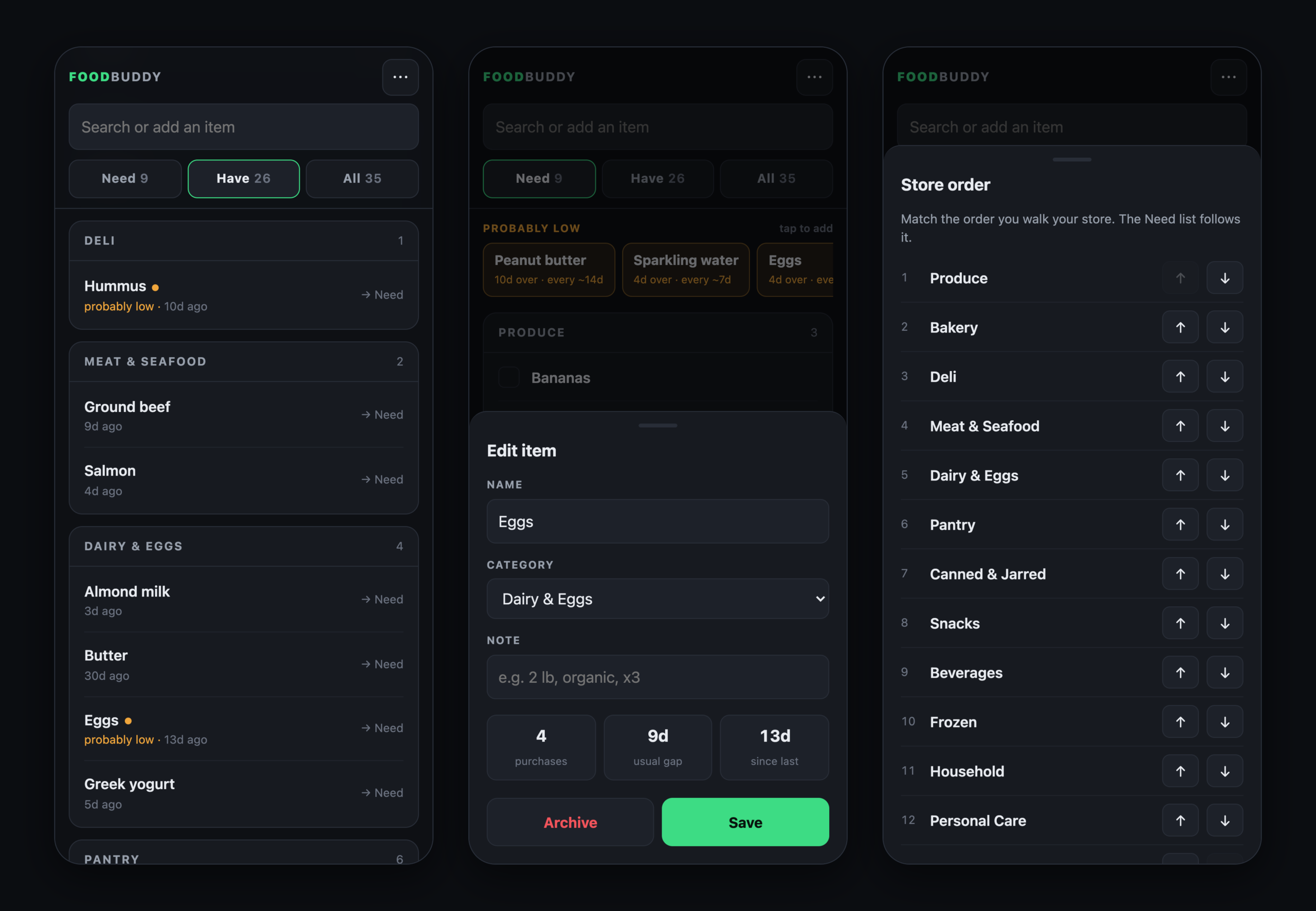
We built FoodBuddy, a phone app that keeps one permanent list of everything a household buys, with each item marked Have or Need.

We Built

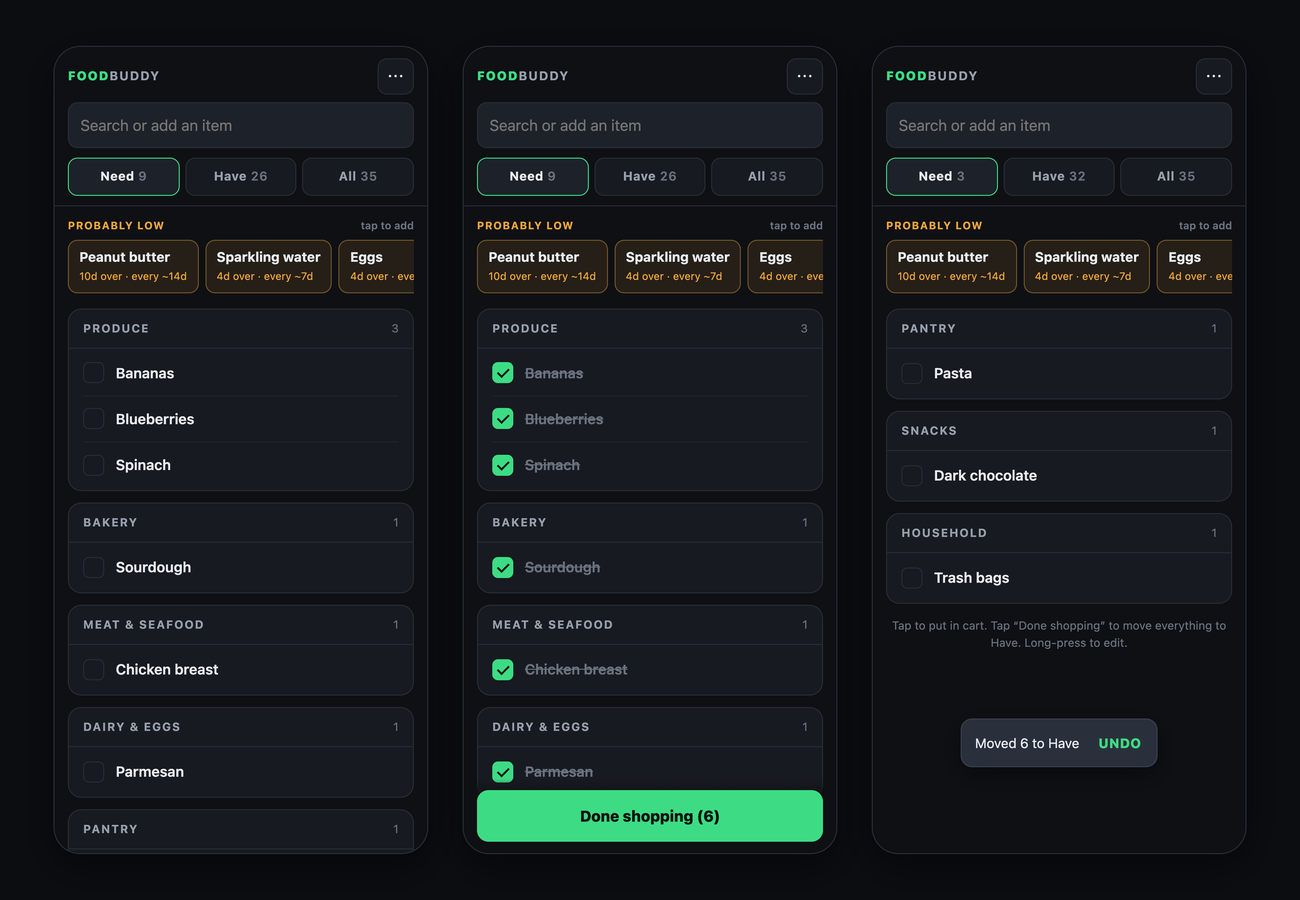
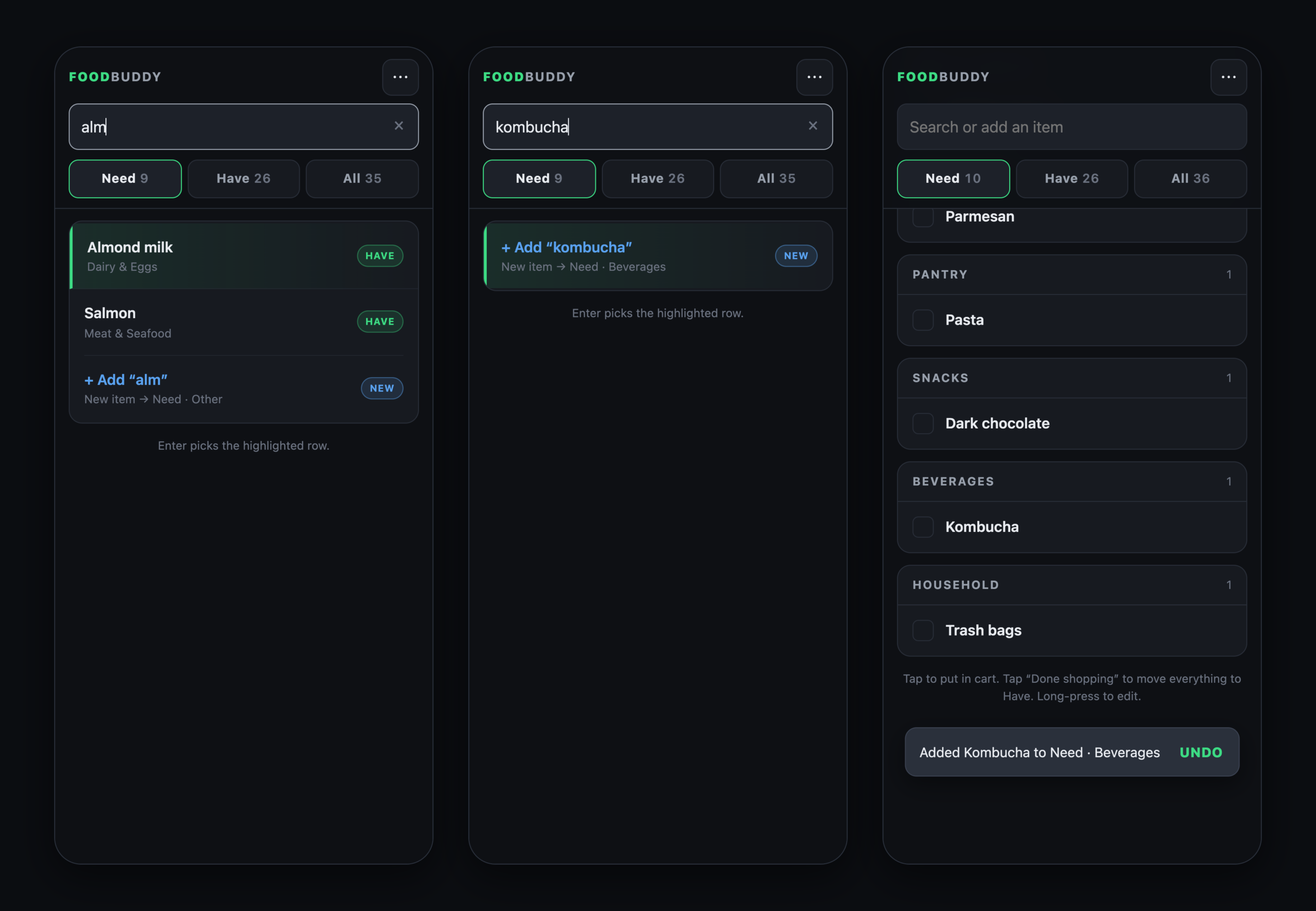
  • One Permanent List: Adding an item takes a few typed letters and a tap. In the store, items are struck off with a tap, and “Done shopping” moves them all to Have and logs the purchase.
  • Sorted by Store Section: Each new item is sorted on its own into one of 13 store sections, with AI placing the unusual ones. The Need list follows the order the shopper walks the store.
  • Knows What Is Running Low: The app learns how often each item is bought and flags the ones that are probably running low.
  • Paste a Whole List at Once: A list pasted from another app is cleaned up and added in one step.

Why We Built It

“I used to type ‘Almond Milk’ into my grocery list EVERY week.”

– Michael Trezza, CEO Lithyem
Mobile Grocery List App screenshot
Mobile Grocery List App

1

Add It Once

→ Type a few letters and tap. The item stays on the list for good and never has to be typed again.

2

Sorted by Aisle

→ Each new item lands in one of 13 store sections, in the order the shopper walks the store.

3

One Tap in the Store

→ Each item is struck off with a tap, and one more tap logs the whole trip.

4

Knows What Is Low

→ Once an item has been bought on three different days, the app learns how often it runs out and flags it.